Limits and When It Is Not Advisable
The use of low-enthalpy geothermal systems without the adoption of a heat pump presents significant technical limitations, making this approach largely ineffective in many traditional residential applications.
Domestic geothermal heating system without heat pump
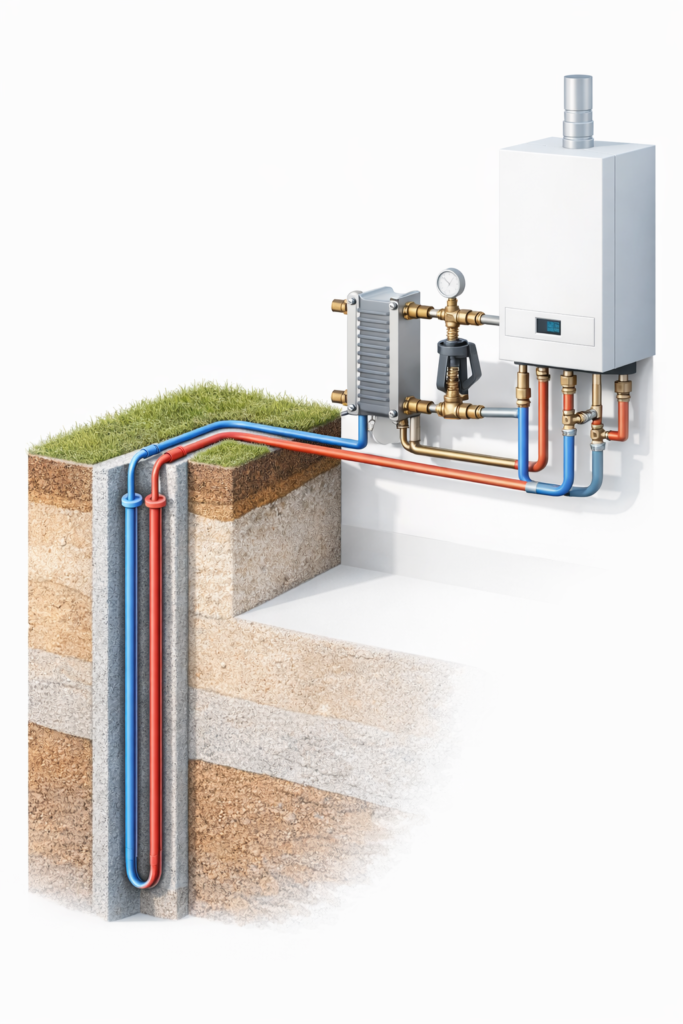
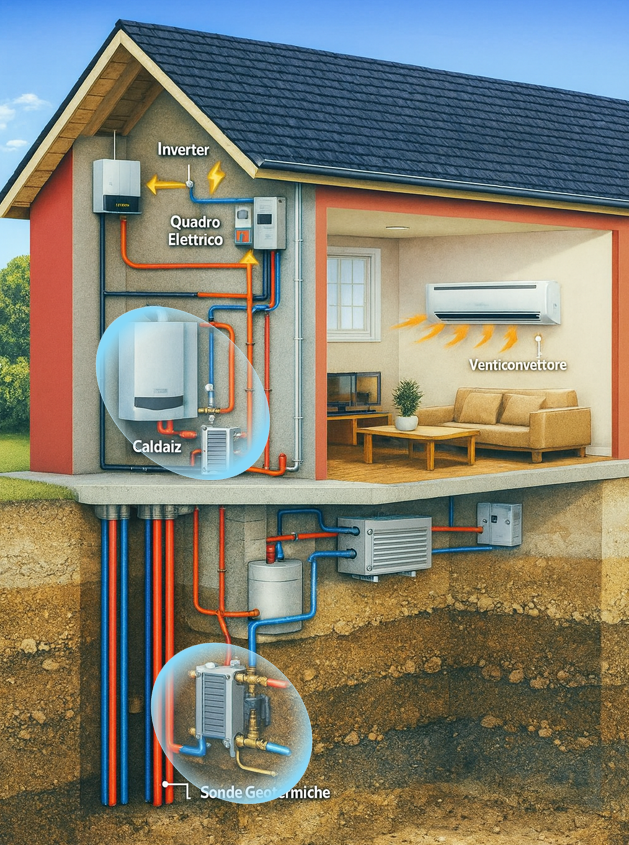
In the absence of a heat pump, the subsoil can provide only low-temperature thermal energy, typically ranging between 14 and 17 °C under common conditions. Such values are insufficient to directly supply conventional heating systems, such as radiator-based installations, which require significantly higher supply temperatures.
In these cases, the geothermal contribution is limited to pre-heating or thermal stabilization functions, with benefits that are often marginal when compared to the costs of system implementation and operation. In particular, in poorly insulated buildings or those characterized by high thermal losses, the energy available from the subsoil is difficult to exploit without a temperature-lifting system.
For these reasons, Silver Innovation Lab considers the use of geothermal systems without a heat pump to be technically meaningful only in specific contexts, such as:
- buildings equipped with low-temperature distribution systems
- passive cooling applications
- experimental or demonstrative systems aimed at studying thermal flows
- marginal integrations within more complex hybrid energy architectures.
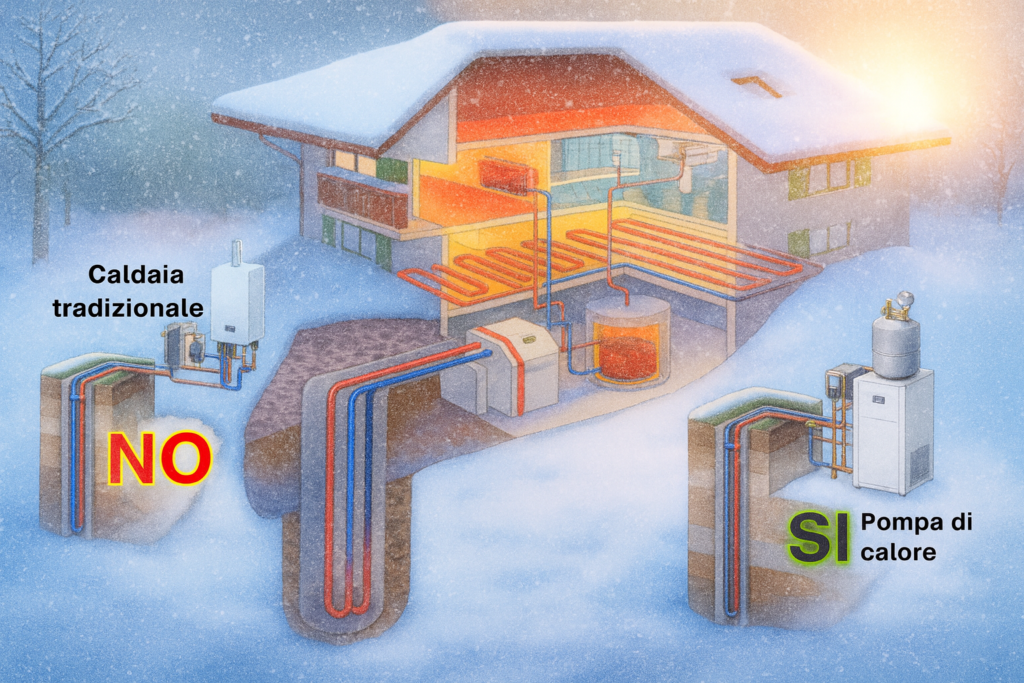
Outside of these scenarios, the adoption of geothermal solutions without a heat pump risks becoming a technical constraint, with an unfavorable cost–benefit ratio and limited overall effectiveness.