Operating Conditions and Minimum Requirements
The integration of a low-enthalpy geothermal system with a heat pump (HP) makes it possible to overcome the limitations related to the low temperature of the subsoil, enabling the use of geothermal energy for heating, cooling, and domestic hot water production.
In this configuration, the subsoil acts as a stable thermal source from which the heat pump extracts energy at moderate temperature levels and raises it to values compatible with the building’s distribution systems. Compared to air-source solutions, the presence of a geothermal source generally allows for greater operational continuity and reduced seasonal performance variations.
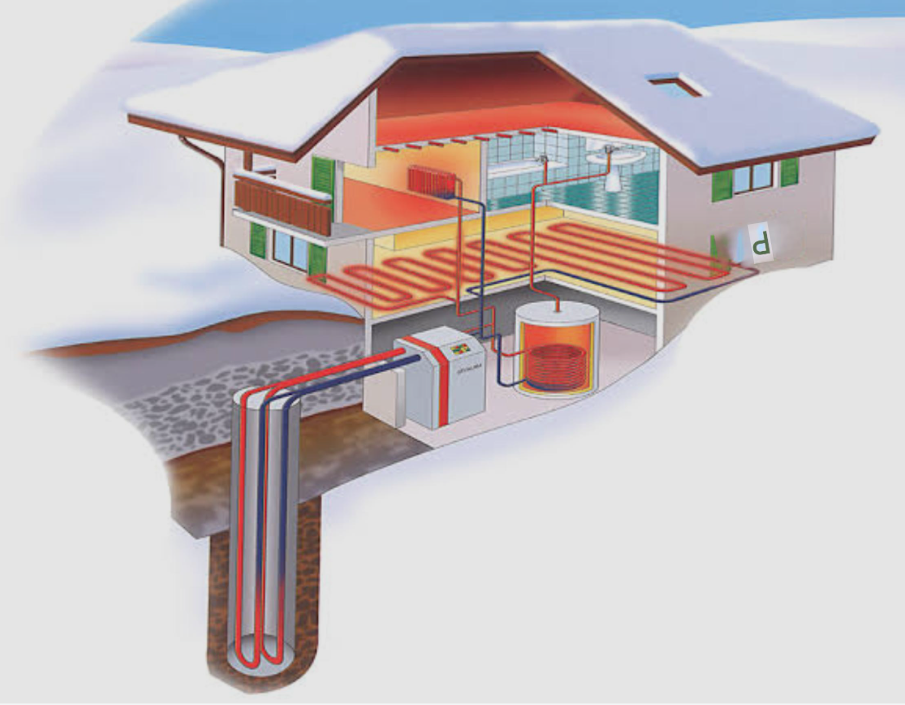
Example of a vertical geothermal system with heat pump
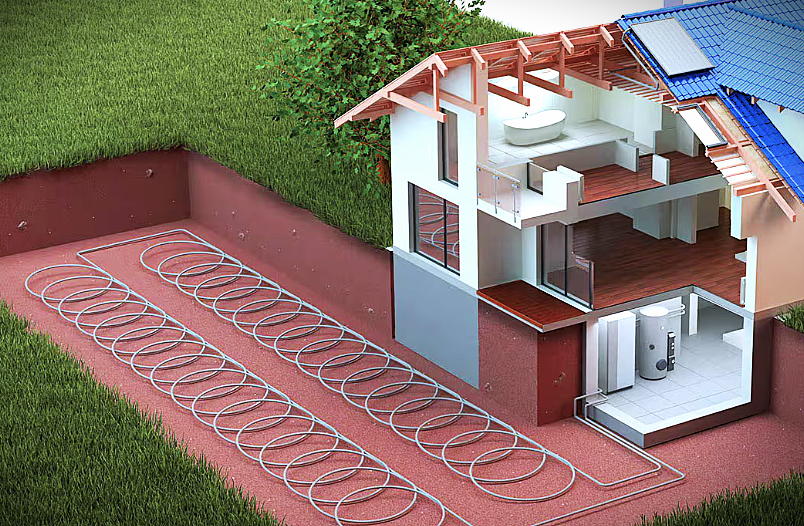
Example of a horizontal geothermal system with heat pump
In this configuration, the subsoil acts as a stable thermal source from which the heat pump extracts energy at moderate temperature levels and raises it to values compatible with the building’s distribution systems. Compared to air-source solutions, the presence of a geothermal source generally allows for greater operational continuity and reduced seasonal performance variations.
However, the effectiveness and sustainability of a geothermal system with a heat pump depend strongly on the technical and building context in which it is implemented. In particular, for this solution to be energetically and economically meaningful, certain minimum requirements must be met.
Minimum requirements for a sensible integration
- Low-temperature distribution systems. Radiant systems (floor, wall, or ceiling) or fan-coil units allow the heat pump to operate with lower supply temperatures, thereby improving overall efficiency.
- Reduced thermal losses of the building envelope. An adequate level of thermal insulation is essential to limit power demand and enable the heat pump to operate under favorable conditions.
- Adequate geothermal capture area or depth. Horizontal collectors or vertical boreholes must be sized consistently with the building’s energy demand, avoiding excessive ground exploitation and long-term performance degradation.
- Efficient control and regulation system.Proper management of temperatures, flow rates, and operating cycles is essential to ensure system stability, reliability, and durability.
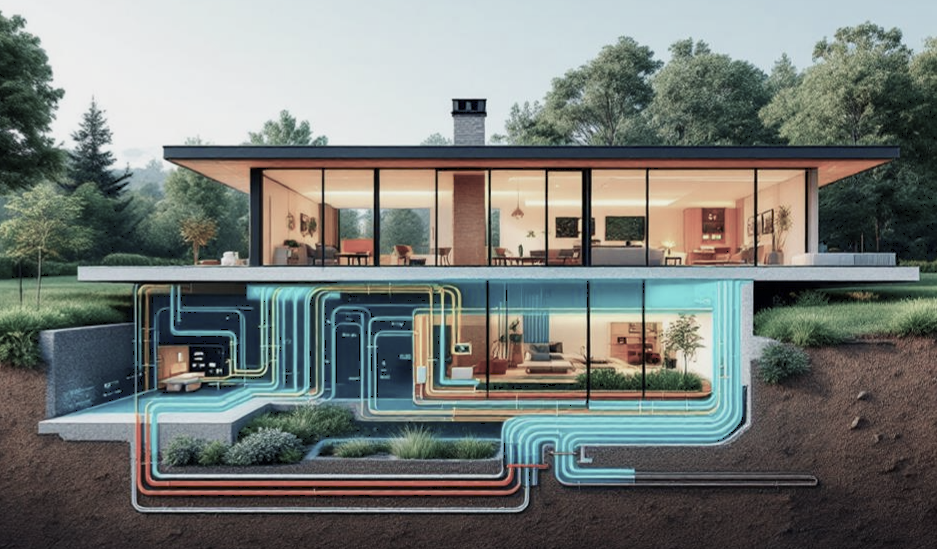
Example of a home with an integrated geothermal system
In the absence of these conditions, the adoption of a geothermal heat pump system may lead to high costs with limited benefits, particularly in buildings equipped with traditional high-temperature distribution systems or characterized by low overall energy efficiency.
For this reason, Silver Innovation Lab considers geothermal systems with heat pumps to be a technically valid solution, but one that must be evaluated on a case-by-case basis, within a conscious design process that takes into account the actual characteristics of the building and the priorities of intervention.