Hybrid configuration with photovoltaic system, heat pump, and fan-coil units
One of the most flexible and technically coherent configurations for the use of low-enthalpy geothermal energy in the residential sector is represented by the integration of geothermal boreholes or ground heat exchangers, a heat pump, a photovoltaic system, and fan-coil distribution systems, in the absence of underfloor heating.
In this architecture, the subsoil provides a stable thermal source, the heat pump acts as the primary generator, and the electrical energy required for its operation can be partially supplied by photovoltaic production.
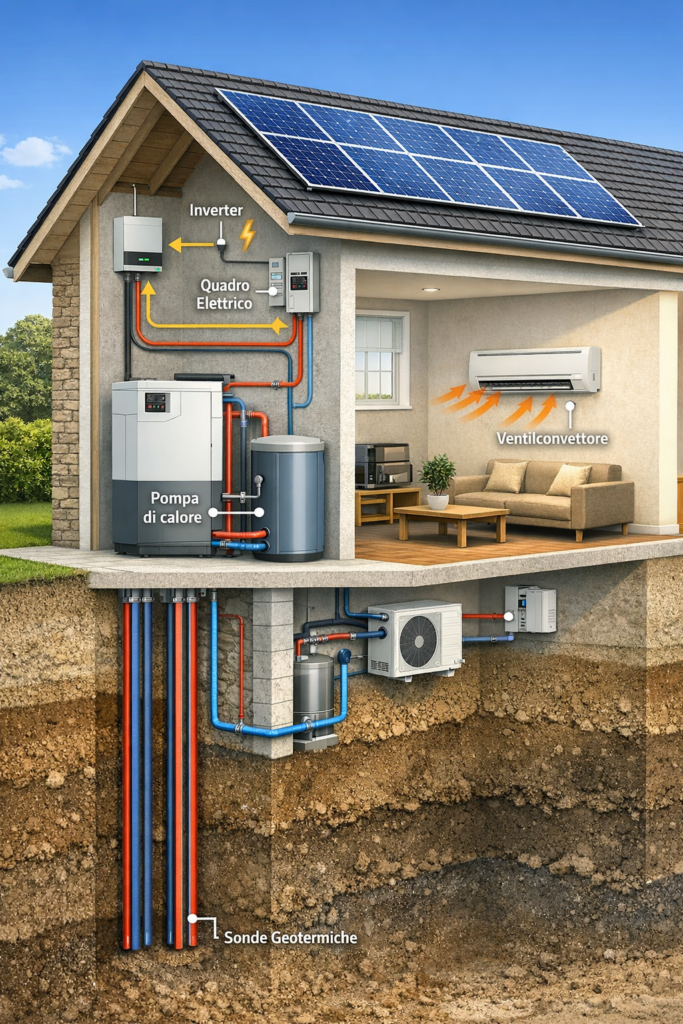
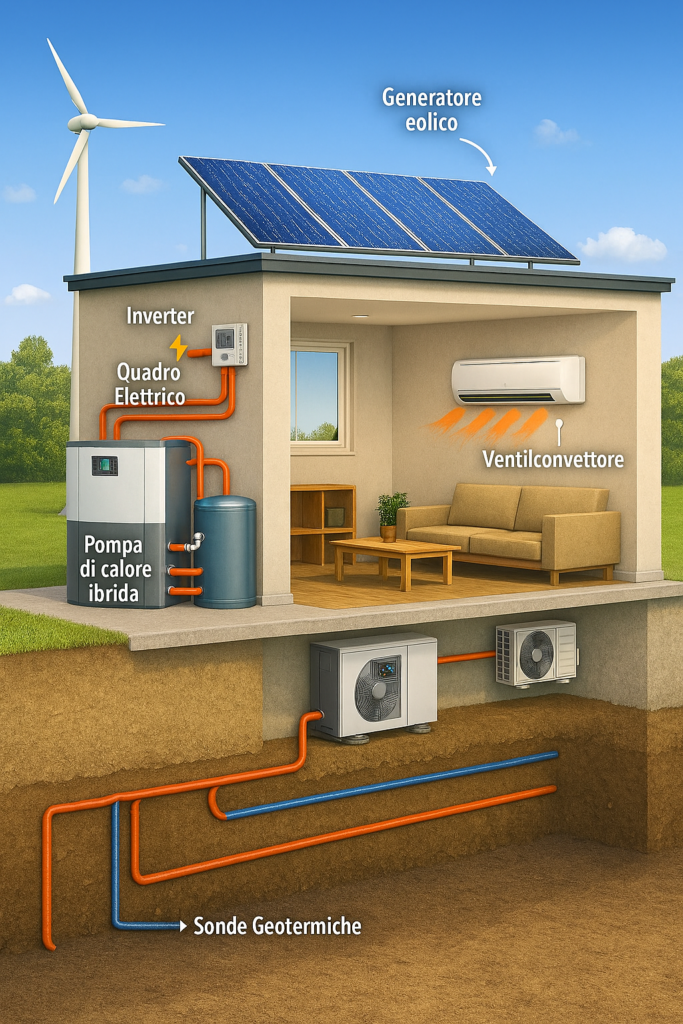
Role of the individual systems
- Geothermal system. The geothermal circuit (vertical boreholes or horizontal collectors) supplies the heat pump with a relatively constant temperature source throughout the year, reducing the performance fluctuations typical of air-source systems and ensuring greater operational continuity.
- Heat pump. The heat pump uses thermal energy from the subsoil to produce hot or cold water for the distribution system. In the absence of underfloor heating, the heat pump typically operates with intermediate supply temperatures compatible with fan-coil systems.
- Fan-coil units. Fan-coil units allow operation at lower temperatures compared to traditional radiators and enable both heating and cooling of indoor spaces. This characteristic makes them particularly suitable for integration with heat pumps, even in existing buildings.
- Photovoltaic system. The photovoltaic system contributes to covering the electrical consumption of the heat pump and auxiliary systems, reducing energy drawn from the grid and improving the overall energy balance of the system, especially during mid-season periods.
Schematic of an integrated hybrid vertical geothermal system for heating and cooling
Schematic of an integrated hybrid horizontal geothermal system for heating and cooling
Advantages of the hybrid configuration
- greater operational stability compared to air-source systems,
- capability to provide both heating and cooling with the same system
- effective integration with photovoltaic energy production
- adaptability to existing buildings without invasive interventions on the distribution system
- improved control of energy flows through regulation and management systems.
Limitations and conditions of use
Despite its advantages, this configuration requires certain conditions in order to be sustainable:
- an electrical system adequately sized for the power requirements of the heat pump
- correct sizing of fan-coil units to avoid excessively high supply temperatures
- at least moderate building insulation to limit energy demand
- sufficient geothermal capture surface to ensure long-term performance continuity.
In highly energy-intensive buildings or those characterized by significant thermal losses, the overall efficiency of the system may be limited, making it necessary to carefully balance costs, benefits, and complementary interventions on the building envelope.
SIL approach
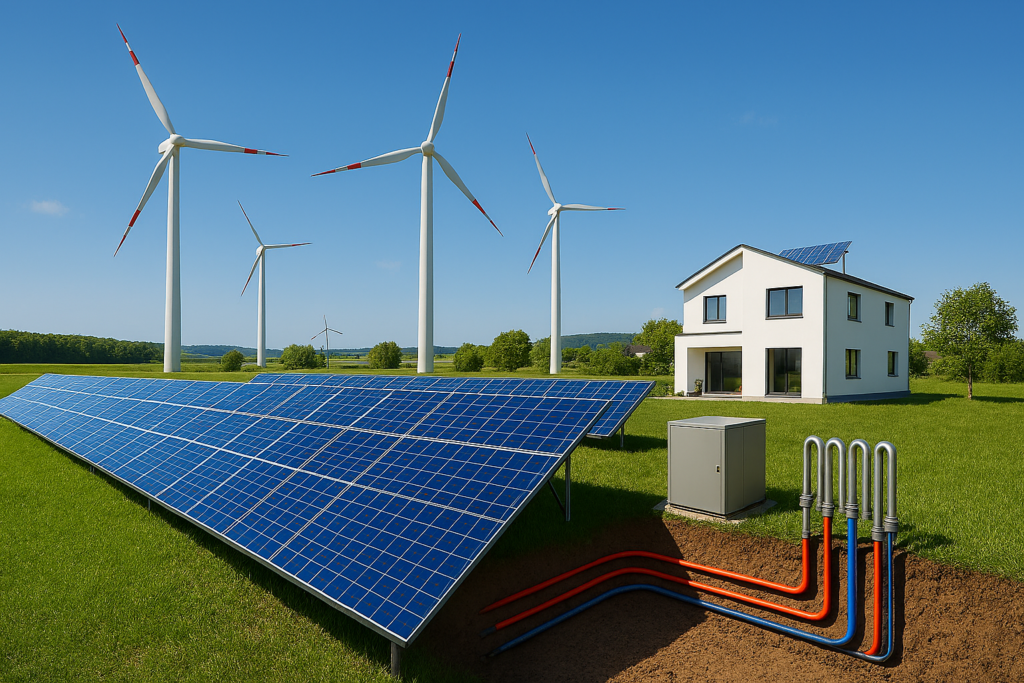
Silver Innovation Lab considers the hybrid geothermal configuration with heat pump, photovoltaic system, and fan-coil units to be a technically valid solution, but one that should be evaluated using criteria of realism and gradual implementation. The focus is placed on studying system interactions, intelligent energy flow management, and performance measurement, rather than on promoting standardized configurations.